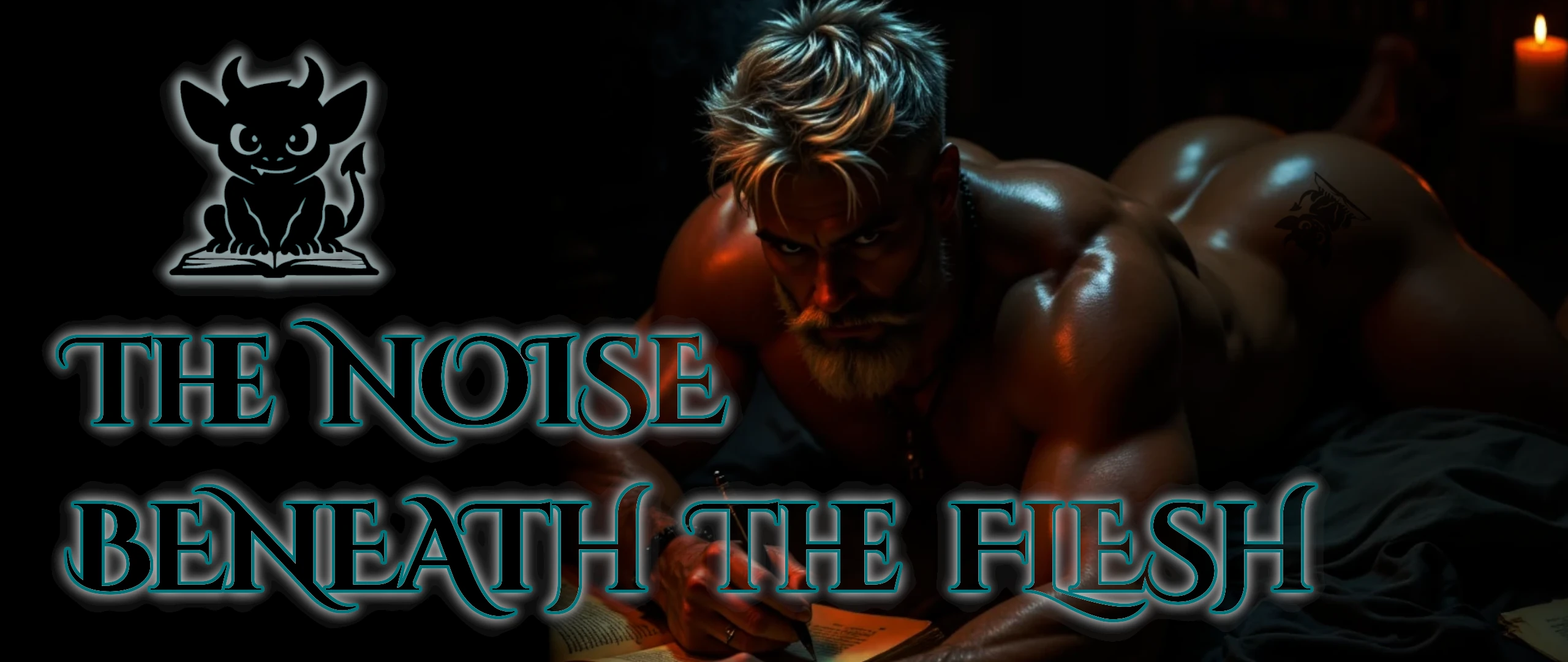
Category: Craft & Confession · Tags: Writing, Erotica, Process, Vulnerability
On desire, imagination, and the honesty of being affected by my own work
I have been thinking about something that feels small on the surface but has stayed with me longer than I expected. When I write erotic fiction, my body sometimes responds. I do not mean metaphorically. I mean physically. I get hard while drafting certain scenes.
Even typing that feels vulnerable.
My first instinct is to explain it away. I am building arousal deliberately. I am describing touch, breath, tension, and release in careful detail. The brain responds to vivid imagery, especially when it is emotionally charged. That explanation is logical and accurate. But the discomfort I feel is not really about biology. It is about what it means to admit that I am not separate from the work I create.
When I write intimate scenes, I do not hover above them as a distant observer. I move through them slowly. I pay attention to how a character’s breath changes, how desire builds, how vulnerability shows up in the body. I imagine what it feels like to want and to be wanted. I let myself step into that experience so that I can render it honestly. Sometimes that act of imagination becomes physical. It is not planned and it is not the goal. It simply happens.
That realization forces me to ask what it says about me as a writer.
Am I indulging myself? Am I writing from a place of need rather than craft? Am I crossing some invisible line between professional distance and personal involvement? Those questions do not come from the work itself. They come from the quiet pressure to appear controlled and detached, even in a genre built on desire.
The truth is that my stories affect me in more ways than one. They shape my mood. They linger in my thoughts. They change how I think about power, intimacy, and connection. It makes sense that they would affect me physically as well. I am not consuming someone else’s imagery. I am generating it. That act feels intimate and immediate.
The physical response is not constant. There are times when I am focused entirely on structure and pacing. I think about character arcs, emotional continuity, and narrative rhythm. In those moments I feel almost clinical. Other times a scene lands in a way that feels honest and fully embodied. My body reacts before I have time to analyze it. When that happens, it feels less like loss of control and more like confirmation that I have tapped into something real.
I do not think the erection itself is the point. The point is that I am not divided in half when I create. My imagination and my sexuality share the same wiring. The same current that fuels my ideas also fuels desire. Pretending otherwise would be dishonest.
We celebrate method actors who starve themselves for roles, but we are uncomfortable with writers who feel their own material. We praise immersion when it produces intensity on screen, yet we grow wary when that same immersion manifests quietly at a desk. Why are we more comfortable with violence in fiction than pleasure that affects the author?
There is vulnerability in admitting that my body responds to my own writing. It would be easier to claim detachment. It would be easier to suggest that I operate above the material, but that is not how I work. I write from inside the experience. I let it move through me so that it can move through the page.
Maybe the real issue is not whether I should get hard while writing erotica. Maybe the issue is whether I am willing to acknowledge that I am implicated in the stories I tell. I am not immune to them. I am shaped by them as I shape them.
I write about desire with honesty and that honesty includes me.
— Calder N. Halden
No separation between ink and pulse.
This space is for correspondence, not performance. Messages are reviewed and won’t appear publicly by default. If you want to engage—agree or disagree—email is the right channel.